
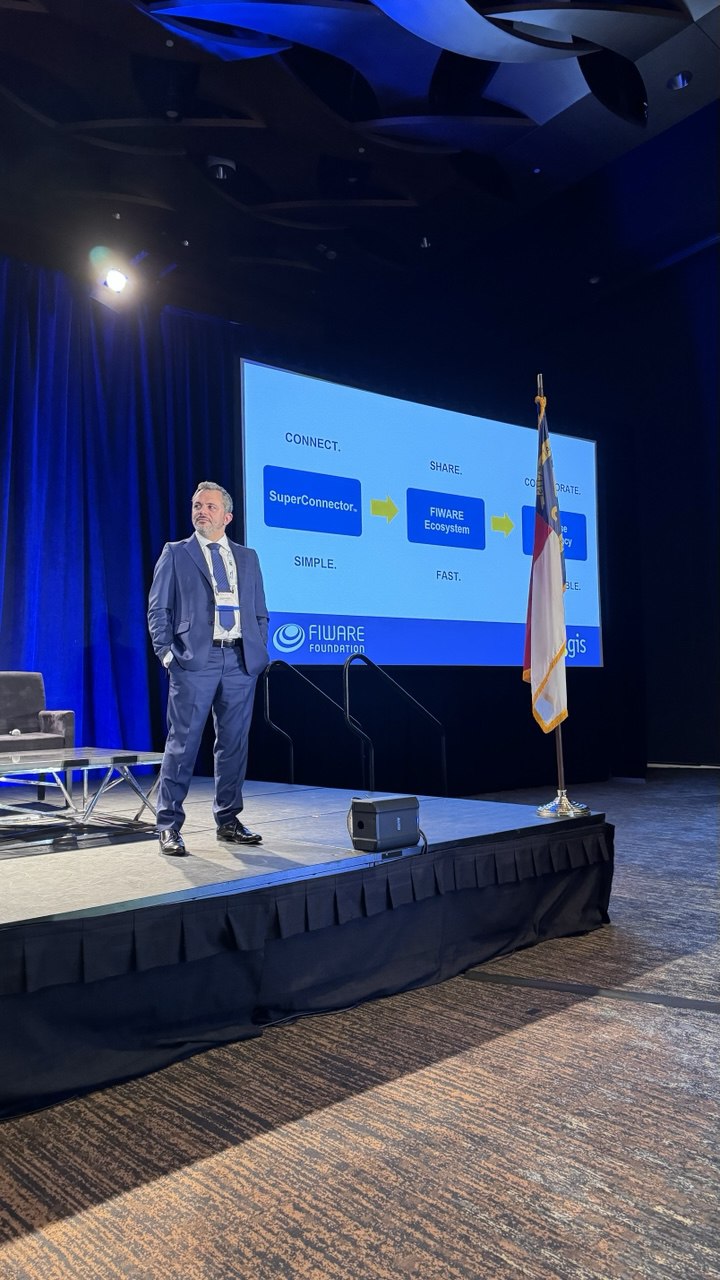
Walking the halls of the Raleigh Convention Center last May, I was struck by how vividly U.S. cities are turning smart-city theory into street-level reality. In the keynote session, representatives from Columbus, Ohio, recounted how their Smart Columbus initiative slashed traffic delays by weaving real-time vehicle and transit data through adaptive signal-control systems, a pilot that reduced intersection wait times by nearly a third. Not far behind was Chicago’s Array of Things, a network of sidewalk-mounted sensors that track air quality, noise and foot traffic; its granular environmental insights have already reshaped how the city schedules street cleaning, times park events and even dispatches emergency responders. Meanwhile, in Kansas City, municipal leaders described how retrofitting more than 70,000 streetlights with two-way broadband radios has not only brightened neighborhoods but opened a portal for smart-parking apps and community Wi-Fi, demonstrating how a seemingly modest upgrade can ripple into multiple service improvements.
Yet the conference floor buzzed just as much around smaller towns eager to plug in alongside those headline-grabbers. In breakout sessions, mayors from rural counties in Texas and Michigan explained how they were forming regional consortia with their metro neighbors, pooling budgetary heft to negotiate shared licensing agreements and to co-develop common APIs. One city manager spoke of a simple but powerful tactic: positioning his town as a living lab for edge-computing pilots, allowing larger partners to test new IoT firmware on municipal water meters in exchange for early access to the resulting data analytics. Through these federated partnerships, even the smallest jurisdiction can channel the innovation muscle of its larger counterparts without surrendering local control or drowning in bespoke integrations.
Behind all the optimism, however, a recurring note of caution sounded every time “open standards” came up. Enthusiasts lauded the freedom to swap out analytics engines or database platforms at will, but pragmatists warned of the risks when those standards are still evolving. In one panel, cybersecurity experts pointed out that widely published interface specifications can become a blueprint for attackers unless every municipality keeps pace with the latest patches, and smaller IT shops often struggle just to maintain their firewalls. Meanwhile, privacy advocates reminded attendees that interoperability sometimes means data lakes grow so deep and broad that innocent metadata trails, like the cadence of a bike-share user’s tapping pattern, can inadvertently reveal sensitive habits. Tears in governance can form when differing interpretations of “open” lead two cities to implement the same protocol in ways that are barely compatible, forcing costly middleware workarounds or forcing a retreat to a single vendor’s proprietary stack.
By the conference’s close, it was clear that America’s smart-city movement thrives on a dynamic tension between collaboration and caution. Celebrated projects in Columbus, Chicago and Kansas City illuminate what’s possible, while the partnerships sprouting between small towns and major urban centers reveal how a fragmented market can nonetheless coalesce around shared goals. At the same time, the more public the standards become, the more diligence each city must invest in security, privacy governance, and version control to ensure that “open” does not mean “exposed.” It is in managing that balance between bold experimentation and sober risk management that the truest promise of smart cities will ultimately be realized.